- The Weekly Buzz 🐝 by Blossom
- Posts
- 🚀 Allbirds Jumps 700% After Bizarre AI Pivot (yes, the shoe brand)
🚀 Allbirds Jumps 700% After Bizarre AI Pivot (yes, the shoe brand)
Plus, markets soar to new all-time highs, and ASML, TSMC, and Netflix report earnings...

Maxwell Nicholson
April 19, 2026
MARKET RECAP
📈 S&P 500 Hits New All-Time High After Iran Says Strait of Hormuz is ‘Completely Open’
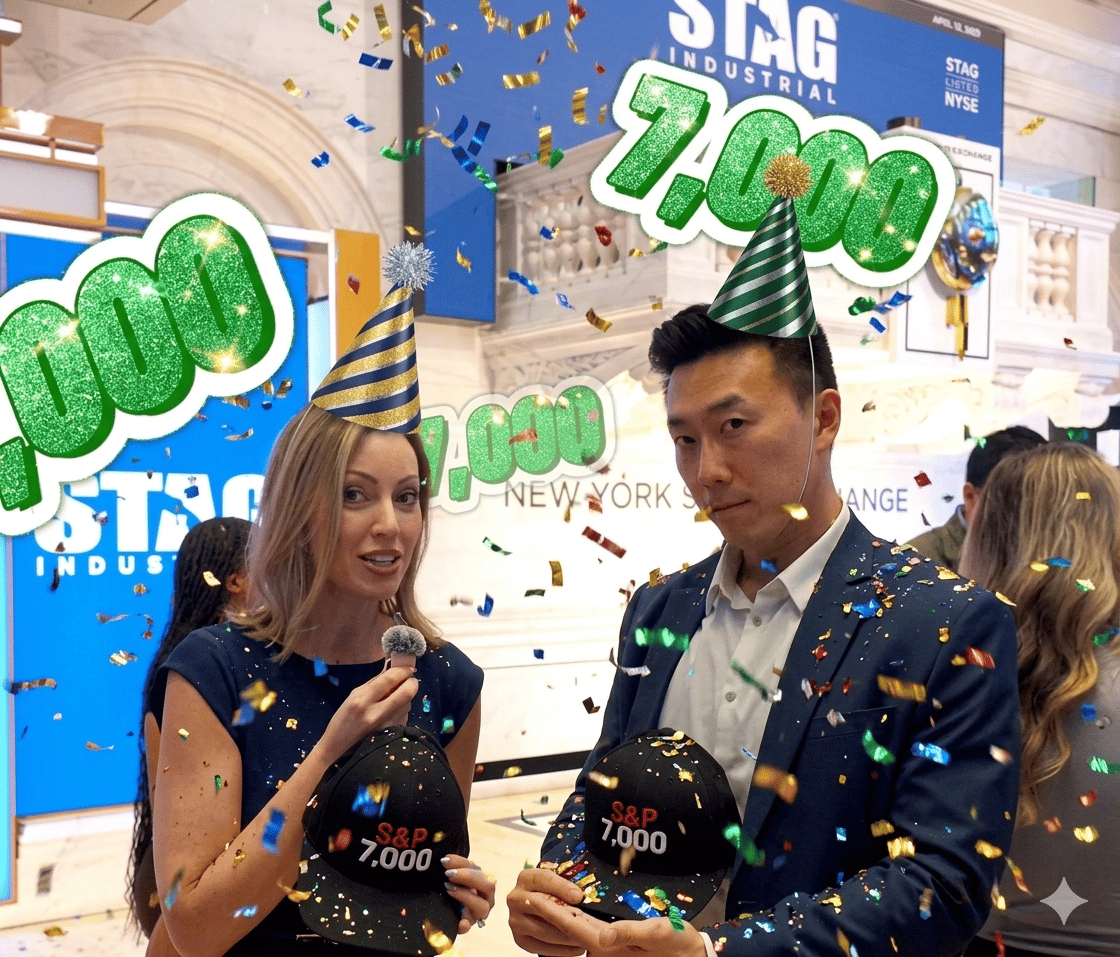
Blossom ambassador Ericnomics celebrates the S&P 500 hitting 7,000 at the New York Stock Exchange with Jessica Inskip (I may have added the party hats and confetti 😜)
👟 Before we get into the crazy Allbirds story, first a quick market recap…
🚀 The stock market boom is back, with markets hitting a new all-time high of 7,000 🥳
🕊️ The main reason for the surge was a full week of good news on peace in Iran, raising hopes of a quick end to the conflict:
On Monday, Trump signaled that both sides wanted to reach an agreement
On Thursday, Israel and Lebanon announced a 10-day Israel-Lebanon ceasefire
On Friday, Iran’s Foreign Minister shared on social media that passage for all commercial vessels through the Strait of Hormuz was “completely open,” sending Brent Crude down 9% on the day.
🏆 Over the past 13 days, the markets have soared, jumping 12% and completely shaking off the crash when the war kicked off. This week took the throne as the best week of the month, with all major U.S. indexes hitting all-time highs:
The S&P 500 rose +4.54%
The Nasdaq 100 rose +6.20%
The TSX rose +1.93%
🥶 The ‘Thin Ice’ Continues
😬 But as always, there’s more to the story…
(PS if you're tired of the US-Iran news, feel free to skip ahead to the feature story on Allbirds AI pivot and it’s 700% stock jump or our coverage of TSMC, ASML, and Netflix earnings)
🚢 Even though Iran said the Strait was opened on Friday, video footage showed that several oil tankers tried to exit the waterway, but were turned back.
🤔 According to one analyst at Kpler (the firm that released the footage), this likely means the vessels weren’t approved to pass, which contradicts the statement by Iran that the Strait was open:
“They’ve clearly not been given approval to pass through.”
🚫 Trump thanked Iran for the announcement and reopening, but said the U.S. naval blockade of Iranian ports would remain in place.
💥 As a response on Saturday, Iran quickly reversed its decision to reopen the Strait and opened fire on multiple ships attempting to pass, saying that any ship “approaching the Strait of Hormuz will be considered as cooperation with the enemy.”
🚨 According to sources, two Indian ships came under fire after the switch-up, and one container ship was struck “by an unknown projectile.”
🗣️ Speaking from the Oval Office Saturday, Trump said Iran “got a little cute” and “can't blackmail us,” while stating that talks were ongoing and he expected to know by end of day whether a deal was moving forward.
🇵🇰 Pakistani mediators are reportedly working to organize a second round of negotiations. But with the current US-Iran ceasefire expiring Wednesday, Trump saying it may not be extended, and the blockade (and Strait closure) remaining in place, we may have to hold our breath… again.
🧨 About 20 minutes before the Hormuz reopening announcement on Friday, investors placed a $760 million bet against oil prices, which is the third time a massive, well-timed oil trade was placed before a major diplomatic announcement in recent weeks. The U.S. CFTC has launched a formal investigation into this, but it’s yet another factor adding to the volatility and confusion.
🤿 Apart from the ongoing US-Iran news, there were a few other big stories this week. The most shocking was Allbirds (yes, the shoe company) pivoting to an AI company… and soaring 700% overnight.
😎 But before we switch gears, a quick word from this week’s sponsor, BMO ETFs!
🙋♂️ P.S. Make sure to check out Beevis (Blossom’s AI Investing Assistant) for personalized market recaps! I’ve trained it on my writing style so it should have a very similar vibe and tone to the Buzz.
PRESENTED BY BMO ETFS
🍁 One ETF, Full Canadian Energy Exposure: Equal-Weight Oil & Gas Made Simple.

⛽️ ZEO – BMO Equal Weight Oil & Gas Index ETF offers a simple way to tap into Canada’s energy sector without having to pick individual stocks.
🍁 This ETF is a pure Canadian energy play, giving investors exposure to a broad group of Canadian oil and gas companies through one trade. Instead of relying on market-cap weighting, ZEO uses an equal-weight approach, meaning each holding gets the same allocation. That can help improve diversification and reduce the impact of any single company on overall returns.
⏰ With a track record of more than 15 years, ZEO has been around long enough to experience multiple energy cycles, making it a familiar option for investors looking to express a sector view. For those who believe in the long-term role of oil and gas in the Canadian economy—or are looking to position for periods of rising oil prices—an ETF can be an efficient solution.
✨ Oil and gas companies often benefit when prices rise, as higher revenues can flow through to profits once fixed costs are covered. ZEO offers a straightforward way to participate in that potential upside, all within a diversified, rules-based ETF
*See BMO Global Asset Management's Disclaimer at the end of the newsletter
TOP STORY
👟🤖 Allbirds (The Shoe Company) Soars 700% After ‘Pivot’ to AI

🤖 We’ve covered AI’s disruption a few times here on the Buzz, whether it’s disrupting software (read here) or causing ruckus in cybersecurity (read here), but this week was something very different.
😅 On Tuesday, Allbirds ($BIRD), an eco-friendly shoe company once valued at $4 billion, announced it had sold off its entire footwear business for $39 million and will be transforming itself into an AI company under the new name NewBird AI.
📉 Its stock, which was down 99% from its 2021 IPO, surged over 700% on the news (but has since fallen 50%).
🤣 It’s easy to laugh this off, but it’s worth taking a quick look at the story. Both because it’s kind of hilarious, but also as a warning of potential ‘frothiness’ in the markets (which btw have shifted back to a state of ‘greed’, a huge shift from ‘extreme fear’ just a month ago)
🧃 A “Plan” to Juice the Stock
👟 According to its press release, the “plan” (if you can call it that) is to raise money, buy compute, and lease it out to companies that can’t get enough from the big cloud providers. That is, of course, with only $50 million and a leadership team that has expertise in… shoes.
💰 For context, the Mag 7 companies have committed a combined $650 billion in AI CapEx for 2026.
🤔 No analysts I could find believes this strategy has any legs, with most saying it’s just a pump-and-dump designed to make quick gains. One even called it a “Hail Mary to juice the stock.”
⚠️ History Repeats Itself

🔄 Slapping a buzzword onto a dying business and watching the stock soar isn’t new. Markets have fallen for this exact trick multiple times before, and almost every time it ends the same way.
🌐 Back in the Dot-Com bubble, companies raced to add “.com” or “e-” to their names and watched their stocks double, sometimes triple, with no underlying business change whatsoever.
🔗 Even in 2017-2018 when blockchain was the next big thing, Long Island Ice Tea, a literal iced tea company from Long Island, renamed itself ”Long Blockchain Corp,” and its stock surged +380% overnight. Turns out it never actually built anything blockchain-related, and the SEC eventually delisted them and filed insider trading charges.
👀 The pattern is always the same. It’s usually a struggling or dying business that pivots into whatever sector has captured the market’s imagination at that time, with no real tech behind the change, leadership that has no idea what they’re doing, and zero actual customers. Just a name change (or a press release), then a stock pump and subsequent crash.
🤑 And typically, it’s us retail investors who fall for these traps trying to make a quick buck.
🫧 A Sign of a Bubble?
⚠️ The more pessimistic view is that stories like these are yet another warning sign that the market's in an AI bubble. When retail investors are piling into a shoe company because it added "AI" to its name, it suggests there's speculative money in the market looking for any excuse to chase a narrative.
✨ The optimist's take is that this is just ‘noise at the margins’. Allbirds was a micro-cap with a $22M market cap. The S&P hitting 7,000 is being driven by real earnings from real companies (like TSMC’s 58% profit growth, which we’ll cover next).
❓ Whether Allbirds is a bubble indicator or just a bizarre one-off is hard to say…. but at the very least, it’s a warning sign that retail investors should be on guard for companies looking to make a quick buck off the AI hype.
📊 If Allbirds is ‘AI-washing,’ it’s time to switch gears to some of the real AI players and take a look at the earnings of TSMC, ASML, and Netflix… but first, a quick word from our other sponsor this week, Harvest ETFs!
SPONSORED BY HARVEST ETFS
🇨🇦 HHIC | Building on Canada’s Success
🍁 Canada remains an attractive investment destination built on a foundation of abundant natural resources and highly competitive industries. It is home to dominant companies with oligopolistic characteristics across key sectors.
🚀 Canadian success stories | Shopify, Energy, and more
🛍️ E-commerce continues to be a standout in the post-pandemic years. Shopify has emerged as a Canadian technology titan on the back of this trend.
💵 The Harvest Shopify Enhanced High Income Shares ETF (TSX: SHPE) offers access through an investment entirely in Shopify and enhances income through covered calls and leverage.
⛽️ Canada’s dominant oil and gas leaders have benefited from higher prices in the wake of the Iran War. The Harvest Enbridge Enhanced High Income Shares (TSX: ENBE), the Harvest Suncor Enhanced High Income Shares ETF (TSX: SUHE), and the Harvest CNQ Enhanced High Income Shares ETF (TSX: CNQE) offer access to Enbridge, Suncor, and Canadian Natural Resources stock, with high monthly income.
⭐️ For broader exposure, the Harvest Canadian High Income Shares ETF (TSX: HHIC) offers access to these and other leading Canadian companies.
*See Harvest ETFs Disclaimer at the end of the newsletter
EARNINGS SEASON
📊 TSMC and ASML Crush Earnings, Netflix Sinks 10% After Founder Leaves
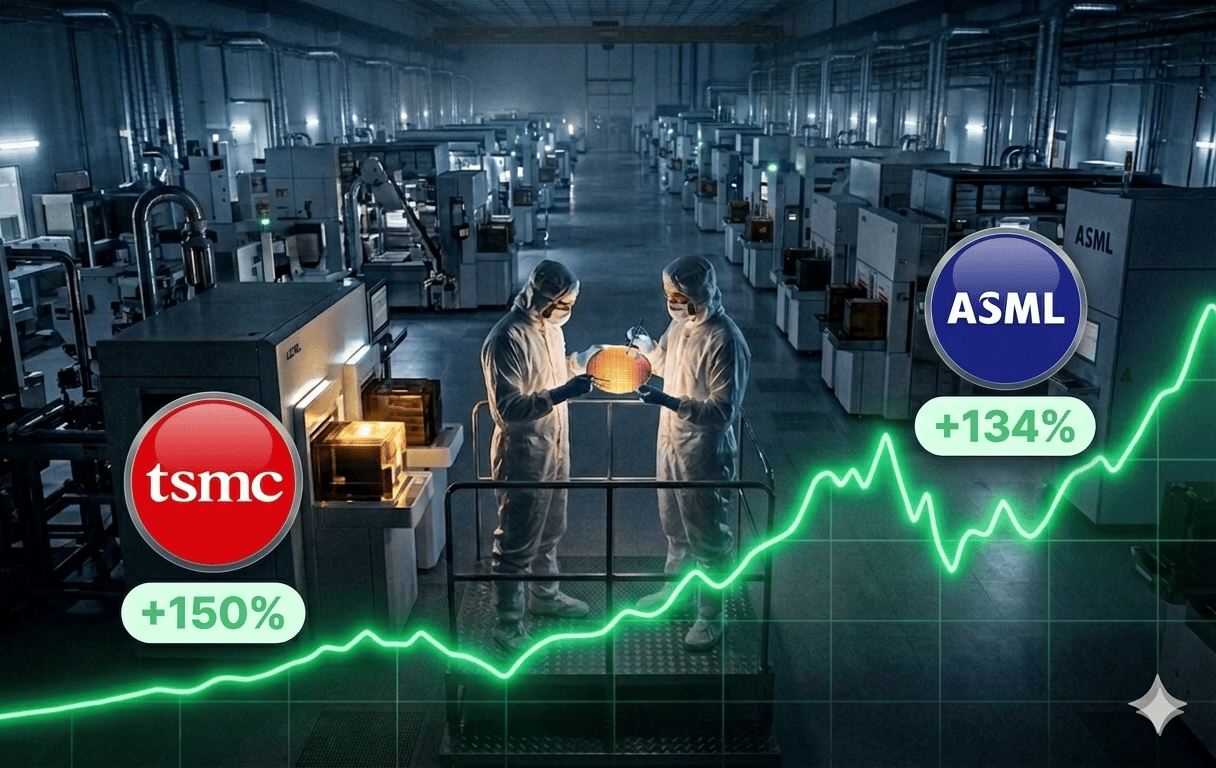
💪 This week, earnings season kicked off in full gear, and today we’ll cover 3 of the biggest ones to watch: Taiwan Semiconductor ($TSM), ASML ($ASML), and Netflix ($NFLX), starting with TSMC.
🤖 Taiwan Semiconductor Proves AI Demand Isn’t Slowing
🏭 TSMC (which makes the chips that power the AI boom) reported its fourth consecutive quarter of record profits on Wednesday, beating expectations across the board, proving that AI demand isn’t slowing down anytime soon.
📊 By the numbers:
✅ Revenue hit $35.9 billion vs. $35.2 billion expected, up 35% year-over-year (the first time quarterly revenue surpassed NT$1 trillion)
✅ Earnings per share hit $3.49 vs $3.31 expected, up 58% year-over-year
⚙️ Production of 7nm nodes and below (its most advanced chips) accounted for nearly 75% of total wafer revenue as of this quarter, with the company projecting above 30% revenue growth this year, expecting CapEx to come in at the higher end of its $52 billion to $56 billion forecast to meet continued demand.
AI (demand) is so strong ... Our customers, and customers of customers - who are mainly the cloud service providers - continue to provide us with their very strong signal and positive outlook,
🔭 Looking ahead, TSMC projects revenue between $39 billion and $40 billion for Q2 2026.
⚠️ While results were strong, the company did warn about potential impacts from the war in Iran including rising costs of gas and chemicals crucial for chipmaking.
Despite the strong results, TSMC ended the week basically flat, but for a stock that’s up 150% in the past year, that just means that a lot of this incredible growth is already priced into the company’s nearly $2T valuation.
🔥 ASML Backs Up TSMC’s Growth Story
🔬 ASML, the company that makes the machines for TSMC, was another major semiconductor company reporting this week. By the numbers:
✅ Revenue hit $10.35 billion vs. $10.24 billion expected, up 13% year-over-year
✅ Earnings per share hit $8.46 vs $7.78 expected, up 19% year-over-year
📉 Despite the strong results, ASML fell 6% on the day, ending the week down 1% (but like TSMC, is still up a massive 134% in the past year).
🇨🇳 The slight sell-off came as a result of tightening U.S. export restrictions on chip equipment sales to China, leading to poor results in the region, with sales to China falling to 19% of overall sales in Q1, down 47% from 36% of sales last quarter.
💡 But as one analyst put it, the overall results are positive, even with brief China hiccups:
“ASML’s positive numbers generally paint a favourable picture for the semiconductor industry, even amid AI bubble concerns.”
Picks & Shovels In the Gold Rush
✨ Now, while these numbers are no doubt impressive, they shouldn’t be a big surprise. Players like Nvidia, ASML, and TSMC are the ones selling the picks & shovels in the AI gold rush. So long as companies like Meta, Amazon, and Google keep spending billions racing to build AI infrastructure, TSMC and ASML will likely continue to print record profits.
But if the gold rush ever dries up (and Big tech stops spending), the demand for the picks and shovels will dry up too.
🔮 Not to say that it will (as I unfortunately can’t predict the future), but I just think it’s interesting when people point to ASML/TSMC earnings as proof that there isn’t an AI bubble. The main thing to watch will be the big spenders (i.e., Meta, Amazon, Google, etc.) as their massive spending is what is propelling the whole market forward.
💰 Whether or not AI is a bubble will ultimately depend on whether these tech giants start seeing a return on investment for their AI arms race. If they do, then of course the gravy train for ASML, TSMC, and other ‘shovel sellers’ will continue.
👀 Luckily, we won't have to wait long, with most of the Big Tech giants reporting earnings next week (you can see the dates in the Blossom earnings calendar here)… so stay tuned.
📉 Netflix Drops 10% As Co-Founder Reed Hastings Steps Down
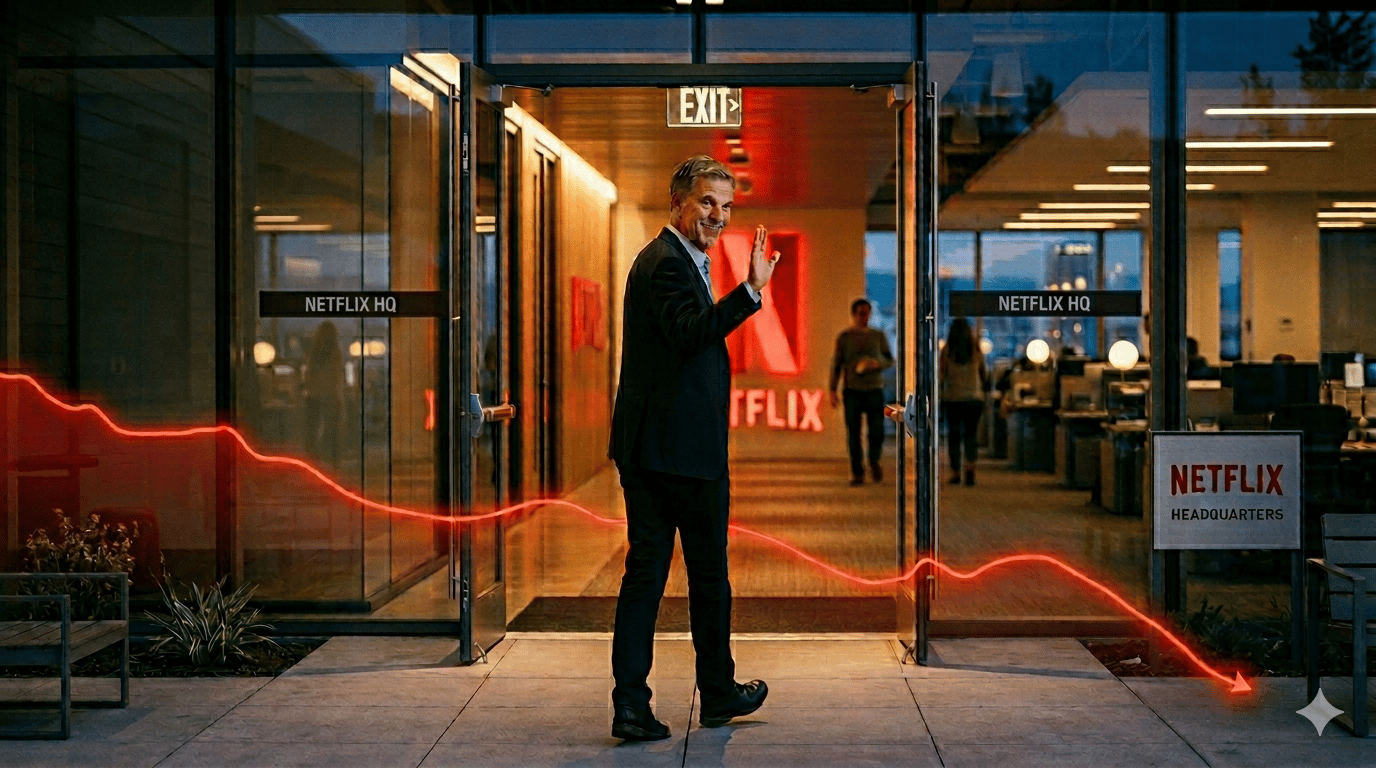
🎬 Reporting on the same day as TSMC, Netflix had a much rougher week falling nearly 10% on earnings day, and ending the week down 6%.
💸 The main reason for the drop was soft guidance for Q2 ($12.57 billion vs. $12.64 billion) and no full-year raise (which most analysts expected). Netflix says this is due to content expenses that usually peak in the second quarter.
“First-quarter results were fine… However, we believe some investors were expecting a beat and raise around the U.S. price increase, which we believe could weigh on near-term sentiment.”
👴 Another big factor was Netflix’s co-founder Reed Hastings announcing he would step down as Chairman of the Board, ending his decade-long tenure at the company (the end of an era).
📊 That said, the numbers were still very strong, and even with the 10% dip, the stock is still beating the market year-to-date with a 7% return.
📺 The company is now on track to hit $3 billion in Ad revenue for 2026, doubling year-over-year, with over 60% of new Netflix sign-ups now choosing the ad-supported tier (where it’s available). Netflix’s advertiser count also grew 70% year-over-year to over 4,000 clients.
🎯 Despite the drop, many analysts were largely unfazed by the miss and if anything saw it as a buying opportunity. Of the 41 analysts covering the stock, most see it as a ‘strong buy’:
Goldman Sachs upgraded Netflix from Neutral to Buy, raising their price target to $120.
Morgan Stanley called it "an attractive entry point."
Wedbush raised its target from $115 to $118,
KeyBanc (quoted above) actually raised its target from $108 to $115 despite flagging the sentiment risk.
🤑 So, for the 7,000 Netflix holders on Blossom (at least according to some of the analysts), this week’s drop could be a good time to buy!
FROM THE BLOSSOM COMMUNITY
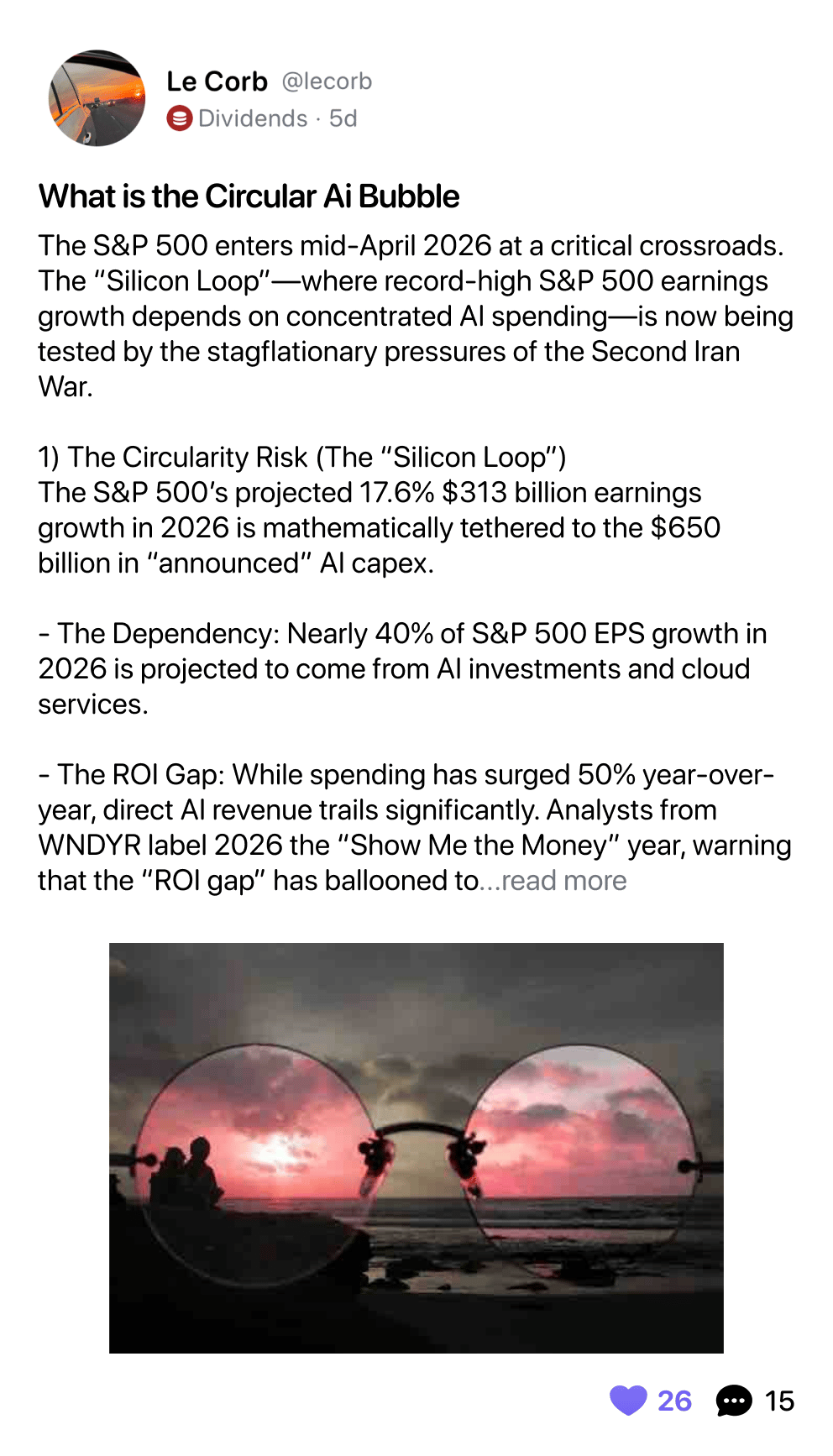
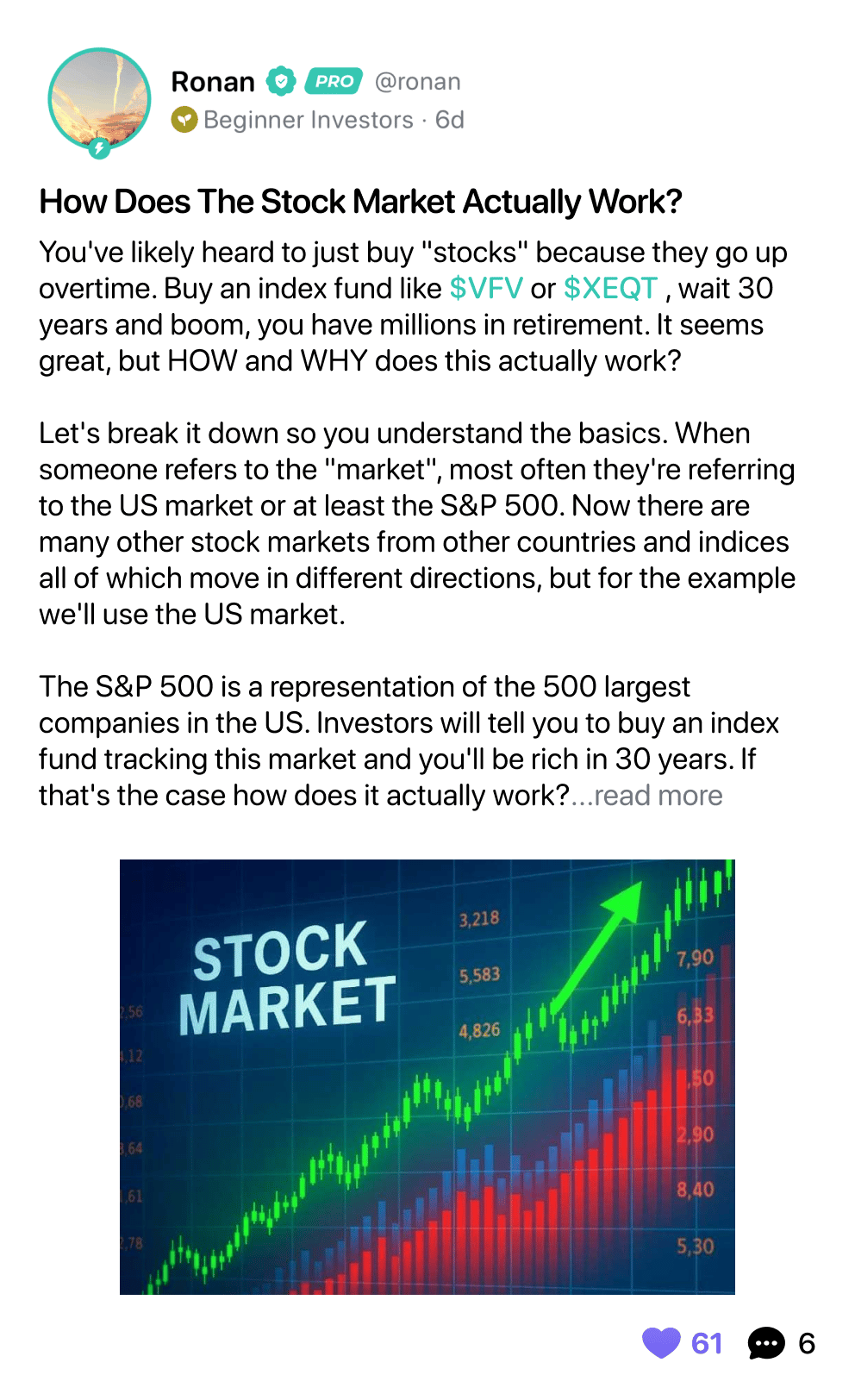
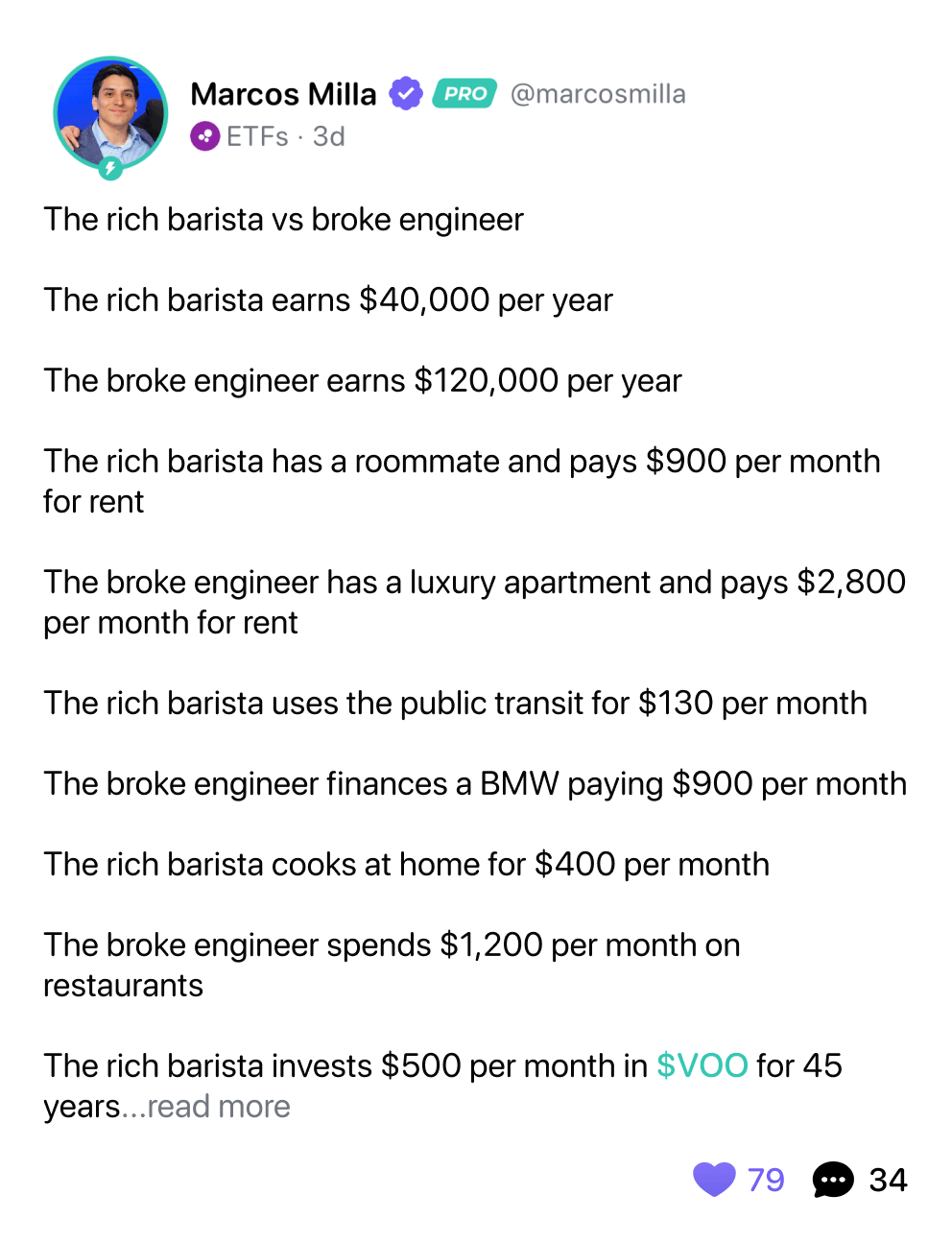
⭐️ Top Discussions of the Week
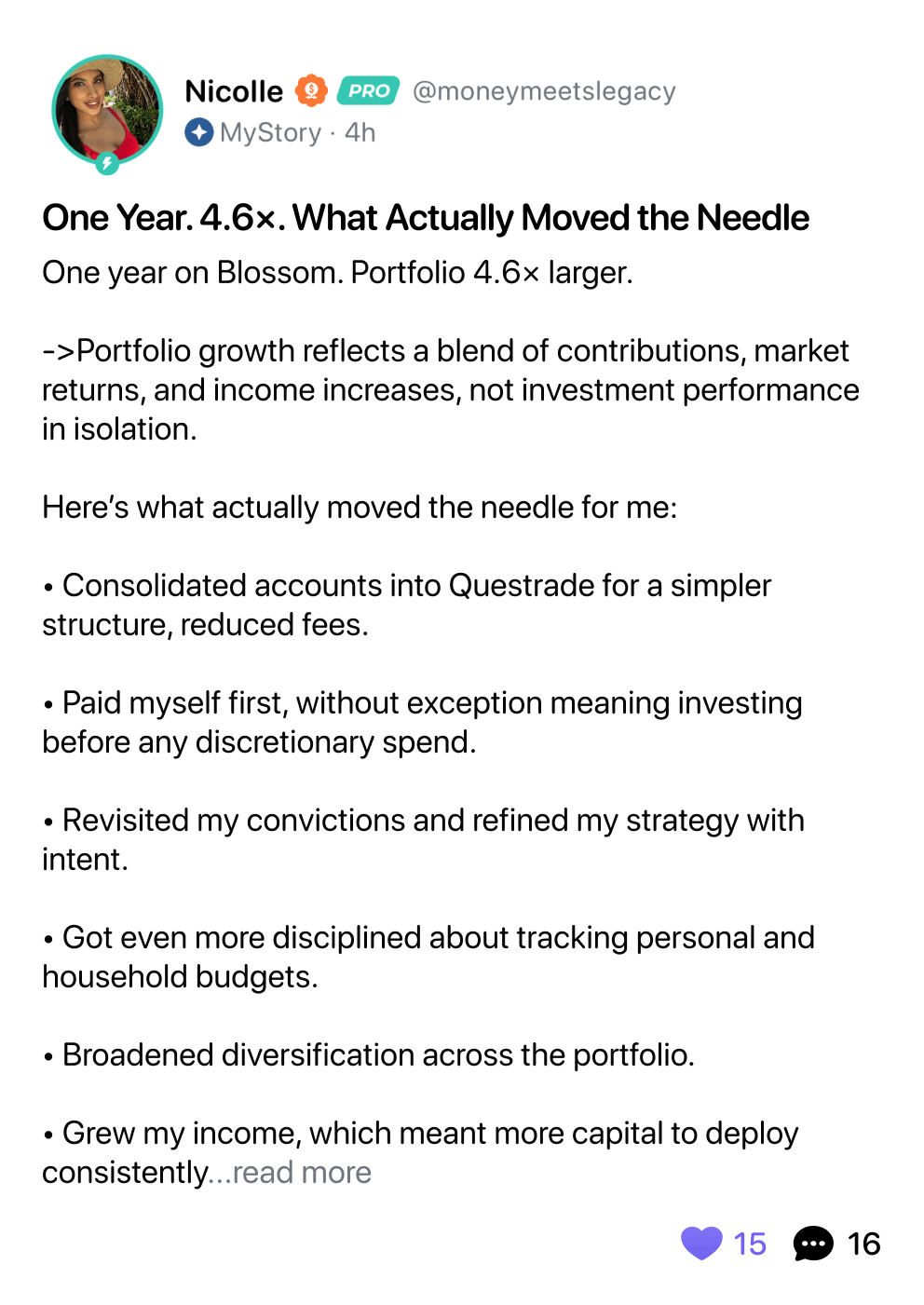
👇 Click to see the full post!
BMO Global Asset Management Disclaimer
Commissions, management fees and expenses all may be associated with investments in exchange-traded funds. Please read the ETF Facts or prospectus of the BMO ETFs before investing. Exchange-traded funds are not guaranteed, their values change frequently and past performance may not be repeated. For a summary of the risks of an investment in the BMO ETFs, please see the specific risks set out in the prospectus. BMO ETFs trade like stocks, fluctuate in market value and may trade at a discount to their net asset value, which may increase the risk of loss. Distributions are not guaranteed and are subject to change and/or elimination. BMO ETFs are managed by BMO Asset Management Inc., an investment fund manager, a portfolio manager, and a separate legal entity from Bank of Montreal. BMO Global Asset Management is a brand name under which BMO Asset Management Inc. and BMO Investments Inc. operate. “BMO (M-bar roundel symbol)” is a registered trademark of Bank of Montreal, used under licence.
Harvest ETFs Disclaimer
This communication should not be considered as advice and/or a recommendation to purchase or sell the mentioned securities or used to engage in personal investment strategies. Tax, investment and all other decisions should be made with guidance from a qualified professional.
Commissions, management fees and expenses all may be associated with investing in Harvest Exchange Traded Funds managed by Harvest Portfolios Group Inc. (the “Funds”). Please read the relevant prospectus before investing. The Funds are not guaranteed, their values change frequently, and past performance may not be repeated. Distributions are paid to you in cash unless you request, pursuant to your participation in a distribution reinvestment plan, that they be reinvested into available Class units of the Fund you own. If a Fund earns less than the amounts distributed, the difference is a return of capital.
Certain statements included in this communication constitute forward-looking statements (“FLS”), including, but not limited to, those identified by the expressions “expect”, “intend”, “will” and similar expressions to the extent they relate to the Fund. The FLS are not historical facts but reflect Harvest’s, the Manager of the Fund, current expectations regarding future results or events. These FLS statements are subject to a number of risks and uncertainties that could cause actual results or events to differ materially from current expectations. Although Harvest, the Manager of the Fund, believes that the assumptions inherent in the FLS are reasonable, FLS are not guarantees of future performance and, accordingly, readers are cautioned not to place undue reliance on such statements due to the inherent uncertainty therein. Harvest, the Manager of the Fund, undertakes no obligation to update publicly or otherwise revise any FLS or information whether as a result of new information, future events or other such factors which affect this information, except as required by law.