- The Weekly Buzz 🐝 by Blossom
- Posts
- 💥 The US Strikes Iran. Here's What To Expect in the Stock Market
💥 The US Strikes Iran. Here's What To Expect in the Stock Market
Plus, OpenAI Raises $110B, Netflix jumps 25% after losing Warner Bros acqusition bid, and more...

Maxwell Nicholson
March 01, 2026

TOP STORY
🪖 The US Strikes Iran. Here's What To Expect in the Stock Market

🪖 Nvidia’s earnings (covered in detail on Thursday) were supposed to be the big story of the week… but that changed yesterday when the US military conducted joint missile strikes with Israel to topple the current regime in Iran.
💀 In less than a day, Iran’s Supreme Leader and other members of the regime were killed, with Trump announcing that strikes will continue “for as long as necessary.”
🎯 The main justification for the attack was to stop Iran from developing nuclear weapons, which, according to Trump, the country wasn’t willing to do. In response to the strikes, Iran launched waves of ballistic missiles and drones targeting Israel and U.S. bases across the Middle East (including striking the Fairmont in Dubai).
🛢️ While the markets closed before the Saturday attack (meaning we won’t see the market’s reaction until Monday), Oil prices reflected the potential conflict, with Brent Crude (the global standard) rising +2.45% on Friday in anticipation (it’s highest price since July).
😥 Obviously, war has a massive human cost, and I don’t mean to downplay the tragedy by jumping directly into market impact, but since this is an investing newsletter, I’ll leave the politics and human impact to the other commentators and focus on what the war means for the stock market…
😰 Risk Of “Guaranteed Global Recession”
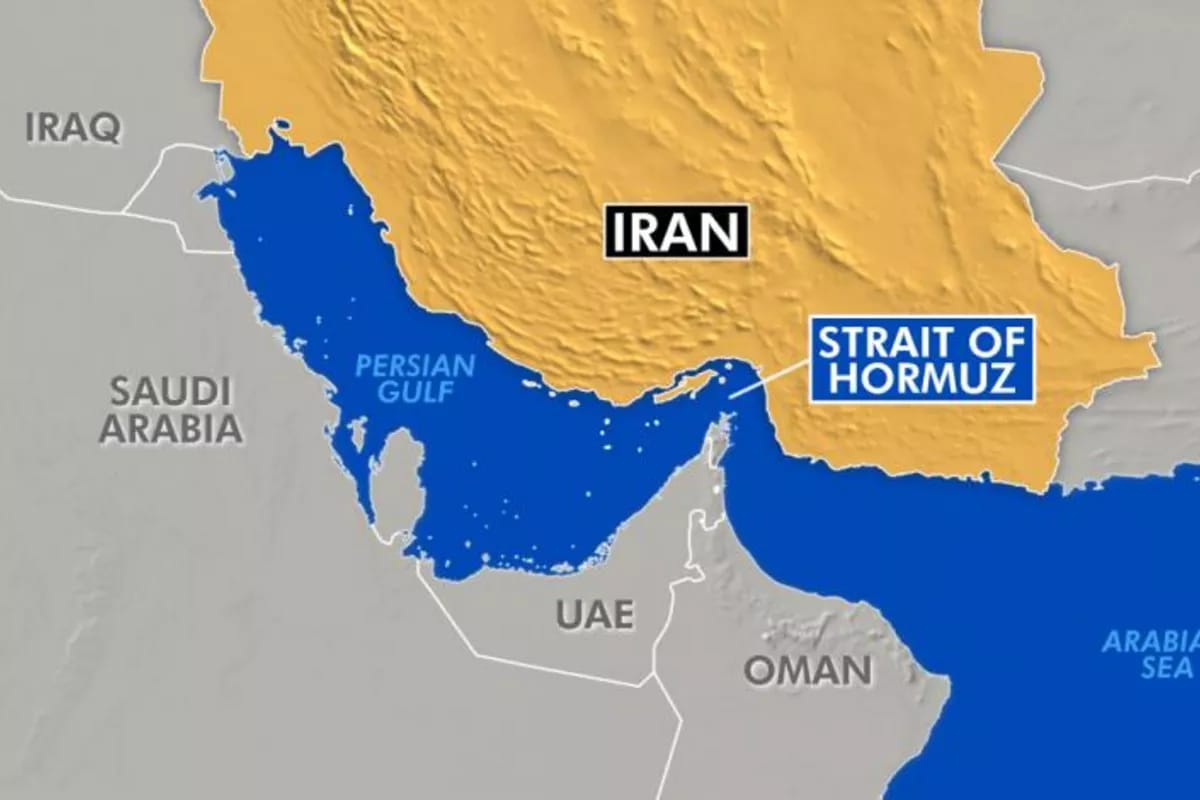
🛳️ Iran is the world’s fourth-largest oil producer globally and shares a coast with the Strait of Hormuz, a waterway that accounts for roughly 20-30% of the world’s total oil trade.
📢 According to former White House advisor Bob McNally, a potential blockage of this strait, likely as a retaliatory measure by Iran, would result in oil prices spiking from $72 to $100 a barrel. And if prolonged, would result in “a guaranteed global recession.”
💬 Even just the prospect of a smaller conflict in the region is expected to make prices jump $5-10 a barrel on fear alone.
😰 According to John Briggs, the head of US rates strategy at Natixis, the “scale of the attacks and Iranian retaliation is larger than what the market expected,” and traders will be adopting a “haven first, ask questions later” approach.
📉 This is bad for stocks since investor anxiety and fear typically drives money managers to sell equities and flee to safe-haven assets like Treasuries and Gold.
⚠️ All this means we’ll likely see a stock market dip on Monday, leading Strategists at Barclays to warn against buying the dip, saying:
“Investors have grown accustomed to geopolitical flare-ups that fade fast, but this episode risks lasting longer. The risk-reward doesn’t seem compelling,” he said. “If equities pull back enough (say over 10% in the S&P 500), there is likely to come a time to buy. But not yet.”
👎 But many others disagree with Ajay, with the Head of Macro Research for Charles Schwab, saying:
“If this conflict has no meaningful downstream impacts on growth or earnings, any negative stock market response has the potential to be short-lived.”
🚨 But in any case, exercise caution on Monday and understand that if you’re buying the dip, you're basically making a bet that the conflict (and market impact) will be short-lived. You could be right, but the move is not without risk!
🤖 Outside of the war, there was actually a lot of other big stories in the world of AI + a massive update in the Netflix bid to buy Paramount, so let’s shift gears to the other big news this week…
😎 But first, a word from our sponsor this week BMO ETFs!
PRESENTED BY BMO ETFS
⭐️ Hey Blossom Socialites- This is your reminder to consider putting those RRSP
contributions to work!

⏰ The 2025 RRSP contribution deadline is March 2—but once you’ve made your contribution, the bigger question becomes: now what?
⭐️ For long-term, buy-and-hold investors, an asset allocation ETF such as ZEQT, the BMO All Equity ETF, offers a simple and effective way to put your RRSP dollars to work. With a single trade, you can gain access to a professionally designed, globally diversified portfolio of equities—so you’re not relying on just one market, sector, or strategy.
💸 It’s investing made refreshingly straightforward. Even better, our low management fee of just 0.15% on ZEQT means more of your money stays invested and compounding over time, which can make a meaningful difference on the road to retirement.
📊 Whether you’re just getting started or fine-tuning an existing plan, BMO’s Asset Allocation ETFs are built to help you stay invested, stay diversified, and stay focused on what matters most: your long-term retirement goals.
*See BMO Global Asset Management's Disclaimer at the end of the newsletter
IN THE WORLD OF AI
🤖 AI Winners and Losers and February’s ‘Panic Rotation’

📊 Outside of the war, there was also a lot going on with AI this week… both good and bad.
🔴 The Bad
📉 On Wednesday, Nvidia ($NVDA) reported blockbuster earnings (which I covered in detail here), but the stock dropped anyway, ending the week down 8% and erasing all its gains so far this year.
⏰ Part of the drop is likely due to Nvidia’s massive exposure to 5 Hyperscalers (Microsoft, Meta, Amazon, Google, and Oracle), which make up 50% of Nvidia’s revenue. Many of these stocks had a rough month as investors grow increasingly impatient on a ‘return on investment’ from the massive AI spending.
🤖 This is reflected in the stock prices across Big Tech, with the MAGS ETF (tracking the Mag 7 Hyperscalers) falling roughly 7% in February.
😰 This drove the S&P 500’s and Nasdaq-100s worst monthly performance since last March. Across the indexes:
The S&P 500 fell 1.4%
The Nasdaq-100 fell 3%
🍁 Meanwhile, the Financials and Energy-heavy TSX index rose 7.6%
🟢 The Good
💰 But it wasn’t all bad… one of the biggest concerns lately has been OpenAI (which is wrapped up in a web of circular deals with players like Nvidia) potentially running out of money to meet its massive spending commitments.
🏦 Well this week, OpenAI raised a record-breaking $110 billion in new funding from Amazon ($AMZN), Nvidia, and SoftBank, valuing the company at $730 billion and easing concerns about its ability to meet its big promises (at least for now).
🏆 Outside of OpenAI, there were also some standout AI winners this week:
🖥️ Dell ($DELL) surged over 20% after reporting 39% revenue growth and forecasting its AI server business will double to $50 billion in fiscal 2027
💳 And Block ($XYZ) (owner of Cash App and Square) jumped nearly 17% after announcing a 40% workforce cut, and restructuring around an “AI-first operating model.”
🤔 It begs the question, if AI is doomed as some say, why are some stocks with AI stories rising while the “premier AI trade” (i.e. Nvidia and the Mag 7) falls?
🔄 Well, analysts are calling this a “panic rotation” where investors are simply relocating their money from the Mag 7 and broader tech due to spending uncertainty. In other words, moving their capital into more defensive sectors and companies with clearer growth stories.
📈 This can be seen based on this month’s sector performance, with tech falling as Utilities and Energy soar:

🔍 Overall, investors don’t seem to be turning a blind eye to AI (or the stock market for that matter), but they’re now turning to new sectors and looking for new AI growth stories like Dell or Block.
🎬 And speaking of growth stories, one popular stock was flying high this week. A small streaming company called Netflix… but before we dive into our final story of the week, a quick word from our other sponsor this week BetaPro!
PRESENTED BY GLOBAL X CANADA
📚 A Smarter Way to Hedge Without Selling Your Investments

💨 When markets move fast
Market pullbacks can happen quickly, and reacting by selling long-term investments can lock in losses, trigger taxes, and make it tricky to get back in at the right time. For many investors, the bigger challenge is staying invested when volatility spikes.
👀 How inverse leveraged ETFs may help
Inverse and inverse leveraged ETFs are often viewed as short-term trading tools, but in certain cases some sophisticated investors also use them to tactically help manage short-term downside risk. By adding inverse exposure tied to the same index or asset class, investors may be able to reduce the impact of short-term market movements without giving up their long-term positions.
🛠️ A tool for specific market events
These ETFs can be particularly useful around known catalysts – such as economic data releases or central bank announcements – when markets are expected to be volatile. In such cases, a smaller, targeted position may help offset short-term market fluctuations while maintaining existing long-term positions.
✨ Use with care
Inverse and leveraged ETFs are not buy-and-hold investments. They reset daily and carry unique risks, especially in volatile markets. While these products are therefore not for everyone, when used selectively and sized appropriately, they may offer tactical flexibility during uncertain market conditions.
*See Global X Canada Disclaimer at the end of the newsletter
ACQUISITION DRAMA
🎬 Netflix Soars 25% After Losing Warner Acquisition Bid to Paramount
⚔️ After a months-long battle, Paramount Skydance ($PSKY) has officially emerged victorious over Netflix ($NFLX) in the bid to purchase Warner Bros. ($WBD).
📋 On Thursday, the Warner Bros. board said Paramount has a “superior offer” to Netflix, and gave Netflix 4 days to come up with a better one. Netflix quickly declined to raise its bid, leaving Paramount with the winning deal.
💰 The two companies (Paramount and Warner Bros.) expect to close the merger by the third quarter of 2026 and will pay Netflix a $2.8 billion breakup fee.
📈 📉 On the news, Netflix shares rose 14%, Paramount rose 20%, and Warner Bros. fell 2% with Netflix ending the week up 25%
😰 The Looming $100 Billion Debt Load

🏷️ Paramount’s offer is a $111 billion cash buyout, or $31 per share for Warner Bros. shareholders. This includes all of the company’s assets, in comparison to Netflix’s $23.25 in cash and $4.50 in Netflix stock ($28 per share total), which only included IP and streaming assets.
🏗️ About $47 billion of the deal is financed with equity from the Ellison family trust and RedBird Capital, while the remaining $57 billion is with debt.
⚠️ But while investors seem excited about the future, some analysts say the debt is a big worry, with the combined entity expected to be left with over $100 billion in debt:
“Overpaying for WBD to accelerate growth is perhaps better than facing a mediocre standalone trajectory. At least this gives [Paramount] a shot at greatness, in our view. But we do not expect them to come out swinging too hard. Before they can invest in growth, they’ll need to cut deep and fast, and allocate most of their [free cash flow] to interest expense and de-levering.”
📅 Overall, this deal will be one of the largest corporate buyouts ever and would leave the combined company with a debt that would take roughly 22 years to pay off, assuming every dollar is spent towards debt repayments.
🎯 On the business front, Paramount is expected to pull some IP strings and create a real viable competitor to Netflix through a new combined streaming platform. Though there are a lot of ifs, and time will tell whether overpaying for a debt-ridden movie studio and declining cable networks was the best bet.
🏆 A “Win-Win-Win”

😌 Despite the idea that Netflix “missed out on a once-in-a-lifetime opportunity,” the co-CEOs of Netflix issued a statement saying they don’t feel bad about the outcome, and that this development won’t change the fact that Netflix is still stronger than ever:
“This transaction was always a ‘nice to have’ at the right price, not a ‘must have’ at any price. We will continue to do what we’ve done for more than 20 years as a public company: delight our members, profitably grow our business, and drive long-term shareholder value.”
💵 For Netflix, walking away means preserving capital for content spending and future growth rather than taking on tens of billions in debt on top of a bidding war it was losing.
🎬 And for Paramount, it gets a leading streaming platform (HBO Max), movie studio, quality IP, and two dozen cable networks… even if the price tag was a bit steep.
💬 To join the discussion on Blossom, make sure to check out @jacobb’s great post on the topic here!
FROM THE BLOSSOM COMMUNITY
⭐️ Top Discussions of the Week
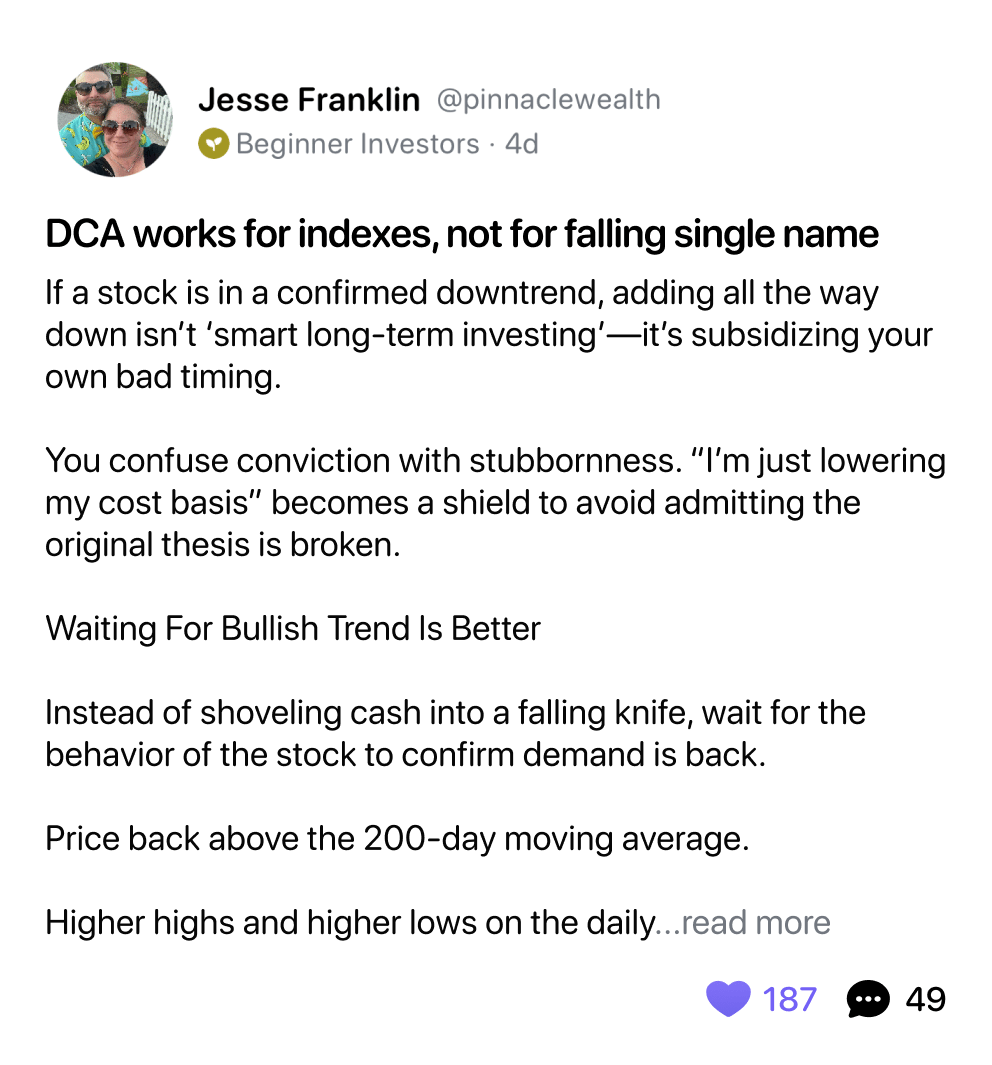
👇 Click to see the full post!
BMO Global Asset Management Disclaimer
BMO Global Asset Management Disclaimer: Commissions, management fees and expenses all may be associated with investments in exchange-traded funds. Please read the ETF Facts or prospectus of the BMO ETFs before investing. Exchange-traded funds are not guaranteed, their values change frequently and past performance may not be repeated. For a summary of the risks of an investment in the BMO ETFs, please see the specific risks set out in the prospectus. BMO ETFs trade like stocks, fluctuate in market value and may trade at a discount to their net asset value, which may increase the risk of loss. Distributions are not guaranteed and are subject to change and/or elimination. BMO ETFs are managed by BMO Asset Management Inc., an investment fund manager, a portfolio manager, and a separate legal entity from Bank of Montreal. BMO Global Asset Management is a brand name under which BMO Asset Management Inc. and BMO Investments Inc. operate. “BMO (M-bar roundel symbol)” is a registered trademark of Bank of Montreal, used under licence.
BetaPro by Global X Disclaimer
Commissions, management fees, and expenses all may be associated with an investment in products (the “Global X Funds”) managed by Global X Investments Canada Inc. The Global X Funds are not guaranteed, their values change frequently and past performance may not be repeated. Certain Global X Funds may have exposure to leveraged investment techniques that magnify gains and losses which may result in greater volatility in value and could be subject to aggressive investment risk and price volatility risk. Such risks are described in the prospectus. The prospectus contains important detailed information about the Global X Funds. Please read the relevant prospectus before investing.
The BetaPro Products consist of our Daily Bull and Daily Bear ETFs (the “Leveraged and Inverse Leveraged ETFs”), Inverse ETFs (the “Inverse ETFs”), and our BetaPro S&P 500 VIX Short-Term Futures™ ETF (the “VIX ETF”) and can offer opportunities for enhanced returns or hedging strategies, but it’s essential to understand and accept the associated risks. Leveraged ETFs aim to amplify the returns of an underlying index, which can lead to higher gains, but they also magnify losses in downturns. Similarly, inverse ETFs seek to profit from declines in the underlying index, meaning they can perform inversely to the market, but losses can accumulate quickly if the market moves against expectations. While these strategies will only be used in accordance with the investment objectives and strategies of the BetaPro Products, during certain market conditions they may accelerate the risk that an investment in shares of a BetaPro Product decreases in value. Investors should be aware of and understand their risk tolerance and capacity and conduct their research before investing. An investment in any of the BetaPro Products is not intended as a complete investment program and is appropriate only for investors who have the capacity to absorb a loss of some or all of their investment.
Please read the full risk disclosure in the prospectus before investing. Investors should monitor their holdings in BetaPro Products and their performance at least as frequently as daily to ensure such investment(s) remain consistent with their investment strategies.
Global X Investments Canada Inc. (“Global X”) is a wholly-owned subsidiary of Mirae Asset Global Investments Co., Ltd. (“Mirae Asset”), the Korea-based asset management entity of Mirae Asset Financial Group. Global X is a corporation existing under the laws of Canada and is the manager, investment manager and trustee of the Global X Funds.
© 2026 Global X Investments Canada Inc. All Rights Reserved.